
The science is sound.
It's time you used it on your finances.
Financial independence is about having the margin to live your life and choose your work.
Free - 15 minutes. No budgeting app required
Analyze where your money is going - and whether it aligns with your values
THE FIELD REALITY
You wanted to help people.
But now you feel trapped.
Burnout research consistently points at caseload volume, administrative burden, and lack of support as the primary drivers. It's rarely the clinical work itself.
The fix is to build margin. You don't need to quit your job or leave the field. You need the ability to do quality work on your terms.
Margin gives you the power to live and work according to your values, no one else's.
THE FI REFRAME
Financial Independence is about choice
Your coworker just burned out, left without notice. You've been handed three new cases on top of the full load you already have. They say you're the only one with capacity, but you're capped at your current workload.
You simply don't have the time or bandwidth to take on more work without sacrificing either your personal life or your clinical quality.
Margin changes what you can do next.
You can agree to take on one case with appropriate compensation. You can say no entirely. You can negotiate your terms.
But you don't have to blindly say yes because you need the job. They need you more than you need them, and you're not willing to sacrifice your quality of life or quality of service.
That's what margin buys.

THE BEHAVIORAL BARRIER
Knowing isn't enough.
Even when helping professionals find the right financial content, something gets in the way.
The podcast resonates and gets forgotten. The spreadsheet gets opened once, gets half finished, then never opened again. A plan gets made and then doesn't get followed.
This is perfectly normal, your willpower is fine.
Financial behaviors are maintained by the same learning, rules, and avoidance patterns that maintain every other human behavior.
Knowing what to do is not the same as doing it. I've spent the last five years trying to budget, save, and get on track. Nothing stuck until I analyzed my behavior and manipulated my environment to make it easier.
The intervention that works isn't more information. It's behavior change. And behavior change starts with values, not budgets.

THE VALUES & CENTS SPENDING AUDIT
Start with one honest look
WHAT YOU WALK AWAY WITH
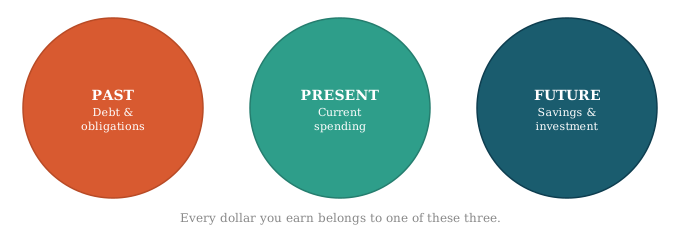
Your past / present / future breakdown
Which spending aligns with your values - and which doesn't
One committed action step, written by you
A downloadable PDF snapshot to keep
IS THIS RIGHT FOR ME?
Built for people who change behavior for a living
Behavioral health professionals - BCBAs, School Psychologists, SLPs, OTs
People who went into this work because they love the science and what it can do for people
This is for you if:
You're good at your job and your financial picture doesn't reflect how hard you've worked to get here
You feel the gap between the work you trained for and the constraints of the system you're working inside - and you want financial margin to do something about it
You're not looking for a budget. You're looking for the leverage to work differently.
This might not be for you if:
You have a net worth over $1 million or a financially complex situation — you need a fee-only financial advisor
You're in active financial crisis — please seek community resources first. This process works best when there's some margin to work with.
You already have a system that's working. If it ain't broke, don't fix it!
What's next?
Click here to work with me, and get your financial actions aligned with your values

© Copyright 2026. Values & Cents. All Rights Reserved.